

+53 Million
Population
+40
Ethnic Groups
+3000 M
Altitude of Mt. Kenya, Africa’s second highest peak
Get Ready to Started?
Namibia
Country Overview
Kenya, often referred to as the “Gateway to East Africa,” is renowned for its breathtaking landscapes, diverse wildlife, and vibrant culture. From the iconic savannahs of the Maasai Mara to the snow-capped peaks of Mount Kenya, this country offers an unparalleled safari experience. Kenya’s rich cultural heritage is reflected in its numerous ethnic groups, each with unique traditions, languages, and customs. Whether exploring the bustling streets of Nairobi or relaxing on the white-sand beaches of the Indian Ocean, Kenya is a destination that promises adventure, discovery, and unforgettable memories.
Geographic Location
Kenya is located on the eastern coast of Africa, bordered by Ethiopia to the north, Somalia to the east, Tanzania to the south, Uganda to the west, and South Sudan to the northwest. The Indian Ocean lies to the southeast, providing Kenya with a beautiful coastline. The country’s diverse geography includes the Great Rift Valley, savannahs, highlands, lakes, and coastal plains.
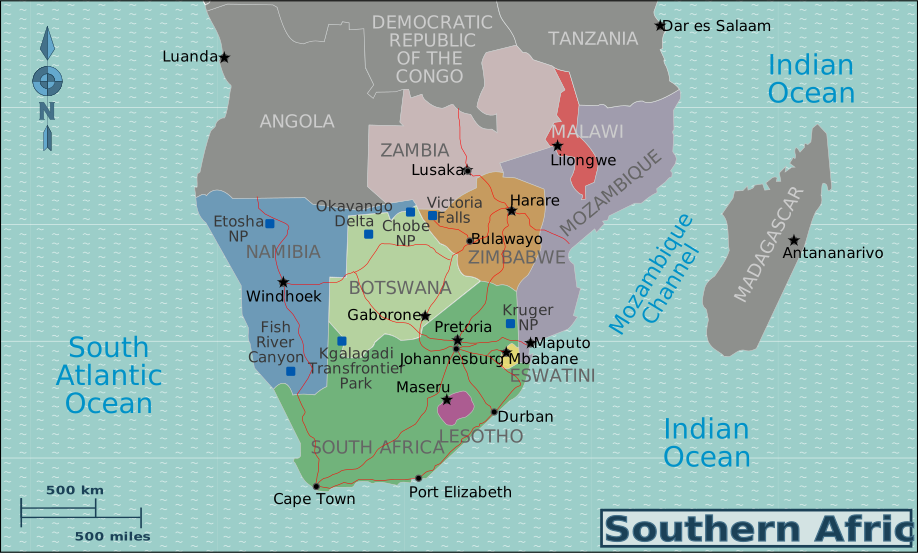
Southern Africa Regions Map By Burmesedays, Minor Amendments by Joelf
Getting Around
Major and Minor Airports:
- Jomo Kenyatta International Airport (Nairobi): The main international gateway, located in the capital city, serving both domestic and international flights.
- Moi International Airport (Mombasa): Serving the coastal city of Mombasa, with both domestic and international flights.
- Wilson Airport (Nairobi): A smaller airport catering primarily to domestic flights, including flights to Kenya’s national parks and reserves.
- Eldoret International Airport: Serving the western region of Kenya, primarily for domestic flights and cargo services.
Flying Times to Kenya:
Here are approximate flying times to Kenya from major global hubs:
- From Europe
- London: Approximately 8–9 hours
- Paris: Approximately 8–9 hours
- From Asia
- Dubai: Approximately 5–6 hours
- Tokyo: Approximately 16–17 hours
- From North America
- New York: Approximately 15 hours (direct flight)
- Toronto: Approximately 15–16 hours
- From South America
- São Paulo: Approximately 17–18 hours
- From Africa
- Johannesburg: Approximately 4–5 hours
- Cairo: Approximately 2–3 hours
- From Oceania
- Sydney: Approximately 20–22 hours
Popular Cities:
- Tunis: The capital city, blending historic charm in the medina with a vibrant modern atmosphere.
- Sousse: A coastal city with beautiful beaches, lively souks, and the UNESCO-listed Ribat of Sousse.
- Monastir: Known for its scenic harbor, historic Ribat, and picturesque resorts.
- Djerba: A tranquil island offering sandy beaches, traditional Berber villages, and ancient synagogues.
- Tozeur: A gateway to the Sahara, famous for its palm oases and stunning desert scenery.
Transportation: Tunisia offers domestic flights for long-distance travel and a reliable rail network connecting major cities like Tunis, Sousse, and Sfax. Buses and louages (shared minibusses) are affordable and widely used for intercity routes, while taxis and trams operate in urban areas. Renting a car or cycling is a great option for exploring at your own pace.
Did You Know?
The Great Rift Valley, which runs through Kenya, is home to some of the world’s most important archaeological sites, including those where early human fossils were discovered, providing key insights into human evolution.
Popular Destinations
- Nairobi: The capital city, offering a mix of modern amenities and cultural sites, including the Nairobi National Park and the Karen Blixen Museum.
- Maasai Mara National Reserve: One of Africa’s most famous wildlife reserves, known for its abundant wildlife and the annual Great Migration.
- Mombasa: A coastal city known for its beautiful beaches, historic Old Town, and Fort Jesus, a UNESCO World Heritage site.
- Lake Nakuru National Park: Famous for its flamingos and diverse bird species, as well as rhinos and other wildlife.
- Mount Kenya: Africa’s second-highest peak, offering trekking and mountaineering opportunities.
- Lamu Island: A UNESCO World Heritage site known for its well-preserved Swahili architecture and rich cultural heritage.
Social and Cultural Insights
People and Society: Kenya is home to over 40 different ethnic groups, with the Kikuyu, Luhya, Luo, Kalenjin, and Kamba being the largest. Each group has its own language, traditions, and customs, contributing to the country’s rich cultural diversity. The official languages are English and Swahili, with Swahili also serving as the national language, uniting the nation across its ethnic diversity. The Kenyan society is characterized by strong communal ties, with family and community playing a central role in social life. The country is religiously diverse, with Christianity being the predominant religion, followed by Islam and indigenous beliefs.
Culture: Kenya’s culture is a vibrant mix of traditional and modern influences.
- Music and dance are integral parts of Kenyan culture, with each ethnic group having its own distinct styles.
- Traditional instruments, such as drums, flutes, and stringed instruments, are commonly used in music and dance performances.
- The country also celebrates various cultural festivals, such as the Lamu Cultural Festival and the Lake Turkana Festival, which showcase Kenya’s rich heritage.
- Kenyan cuisine is equally diverse, with staple foods including ugali (a type of maize porridge), sukuma wiki (collard greens), and nyama choma (grilled meat).
Cultural Etiquette and Tips: Respect for elders and traditional customs is important in Kenyan culture. When greeting someone, it is customary to shake hands, and in some communities, younger people may bow slightly when greeting elders. Visitors should dress modestly, particularly in rural areas and when visiting religious sites. It is also polite to ask permission before taking photographs, especially of people or sacred sites.
Public Holidays:
- New Year’s Day: January 1
- Madaraka Day: June 1 (commemorating the day Kenya attained self-rule in 1963)
- Mashujaa Day (Heroes’ Day): October 20 (honoring those who contributed to Kenya’s independence)
- Jamhuri Day (Independence Day): December 12
- Eid al-Fitr: Date varies
- Eid al-Adha: Date varies
- Christmas Day: December 25
Temple of the Six Columns, Dougga, Tunisia By IssamBarhoumi
Climate and Natural Highlights
Climate: Kenya’s climate varies by region, with the coastal areas experiencing a tropical climate, the central highlands enjoying a temperate climate, and the northern regions being arid. The country has two rainy seasons: the long rains from March to May and the short rains from October to December. The best time to visit Kenya is during the dry seasons (June to October and January to February) when the weather is ideal for safaris and beach holidays.
Sunrise and Sunset Times: Due to its location near the equator, Kenya experiences relatively consistent sunrise and sunset times throughout the year, with sunrise around 6:00 AM and sunset around 6:00 PM.
Wildlife and Natural Landscapes: Kenya is world-famous for its wildlife and natural landscapes. The Maasai Mara National Reserve is known for the Great Migration, where millions of wildebeest, zebras, and gazelles move between Kenya and Tanzania. Mount Kenya, Africa’s second-highest peak, offers stunning trekking opportunities. Other notable attractions include Amboseli National Park, known for its large elephant herds and views of Mount Kilimanjaro, and the coastal city of Mombasa, with its historic sites and beautiful beaches.
Economic and Political Overview
History: Kenya’s history is marked by its early human settlements, with significant fossil discoveries indicating the presence of some of the earliest humans. The country was part of the British Empire from the late 19th century until it gained independence on December 12, 1963. Since independence, Kenya has grown into a regional power with a strong economy, though it has faced challenges such as political unrest and ethnic tensions. Today, Kenya is known for its vibrant culture, wildlife, and leadership in conservation efforts.
Government and Politics: Kenya is a presidential representative democratic republic, with the President serving as both the head of state and government. The country has a multi-party system, and its political landscape is shaped by a commitment to democratic principles, despite occasional challenges. Kenya has made significant strides in governance and economic reforms, with a focus on improving infrastructure, education, and healthcare. The country is also an active participant in regional and international organizations, playing a key role in East African and African Union initiatives.
Economy: Kenya has one of the largest economies in East Africa, driven by agriculture, manufacturing, services, and tourism. Agriculture is the backbone of the economy, with tea, coffee, and horticultural products being key exports. The country is also known for its vibrant technology sector, often referred to as “Silicon Savannah,” with Nairobi being a hub for innovation and startups. Tourism is a major contributor to the economy, with Kenya’s national parks and reserves attracting visitors from around the world. The government continues to focus on diversifying the economy, improving infrastructure, and fostering sustainable development.
Safety, Health, and Entry Requirements
- Safety and Travel Advisories: Kenya is generally safe for tourists, but it is important to stay informed about the current situation and follow travel advisories issued by your government. Exercise caution, particularly in crowded areas and when traveling to remote regions. It is advisable to use reputable tour operators and avoid walking alone at night.
- Healthcare and Vaccinations: Kenya has a range of healthcare facilities, with the best services available in Nairobi and other major cities. Travelers should ensure they have comprehensive health insurance that includes coverage for medical evacuation. Vaccinations for yellow fever, typhoid, hepatitis A, and malaria prophylaxis are recommended.
- Visa Requirements and Entry Procedures: Citizens of many countries can visit Tunisia without a visa for up to 90 days. For longer stays or specific requirements, consult Tunisian embassies or consulates. Ensure your passport is valid for at least six months from the date of entry.
Region
Capital City
- Nairobi, The City in the Sun
Currency
- Kenya Shilling (KES)
Languages
- Swahili
- English
- 60+ Local Languages
Timezone
- Central European Time (CET), UTC+1
- United States